Introduction
The legend of a lost city of gold has fascinated explorers, historians, and treasure hunters for centuries. From Spanish conquistadors searching for El Dorado in South America to tales of hidden riches in India, the allure of untold wealth buried beneath the earth continues to captivate imaginations. In India, whispers of a golden city have persisted through folklore, ancient texts, and local traditions, often tied to powerful kingdoms and forgotten dynasties.
While no definitive discovery has been made, archaeologists and historians have uncovered tantalizing clues over the years. Some believe these traces point to a real, though perhaps less mythical, settlement that once thrived in India’s rich cultural landscape. Whether rooted in historical fact or embellished by time, the legend endures as a testament to India’s deep and mysterious past.
The Legend of the Lost City of Gold
Stories of a golden city in India vary, but many center around the idea of a prosperous kingdom that vanished under mysterious circumstances. Some versions link it to the mythical city of Dwarka, said to have been ruled by Lord Krishna before it sank into the sea. Others suggest it could be connected to the Vijayanagara Empire, known for its opulent temples and vast wealth. The common thread is a place of unimaginable riches, lost to time and waiting to be rediscovered.
Folklore often blends with historical accounts, making it difficult to separate fact from fiction. Ancient texts like the Mahabharata and Puranas mention wealthy cities that no longer exist, while travelers’ tales from medieval times describe encounters with gold-laden rulers. These narratives have fueled expeditions and research, though concrete evidence remains elusive.
Historical Context and Archaeological Clues
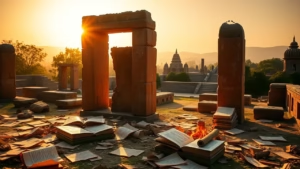
India’s history is dotted with powerful empires and flourishing trade centers, some of which faded into obscurity. The Mauryan and Gupta dynasties, for example, were known for their wealth and advanced urban planning. Archaeologists have unearthed remnants of grand cities like Pataliputra and Taxila, but none have yet matched the legendary descriptions of a fully golden metropolis.
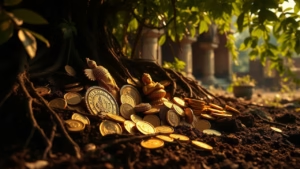
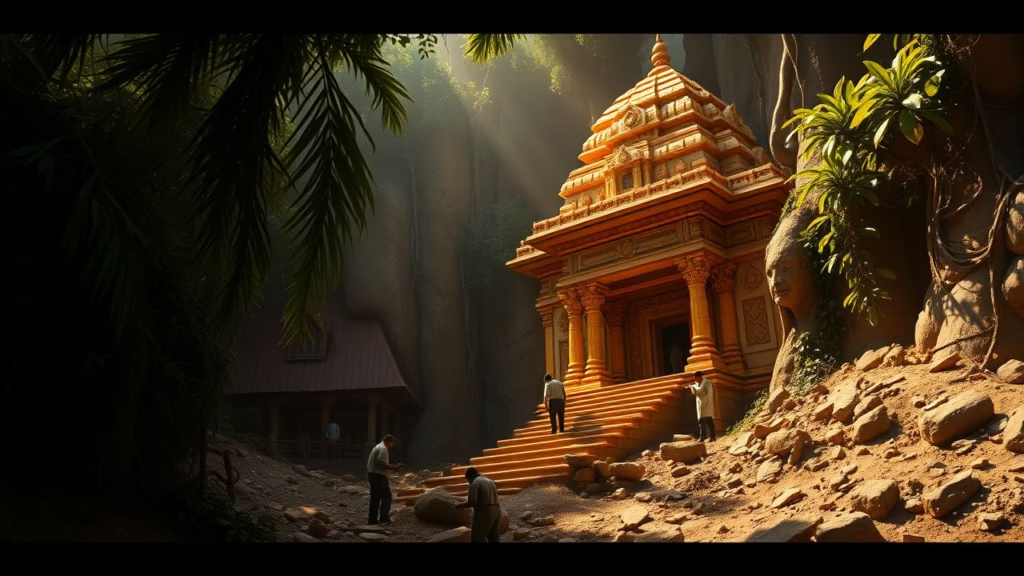
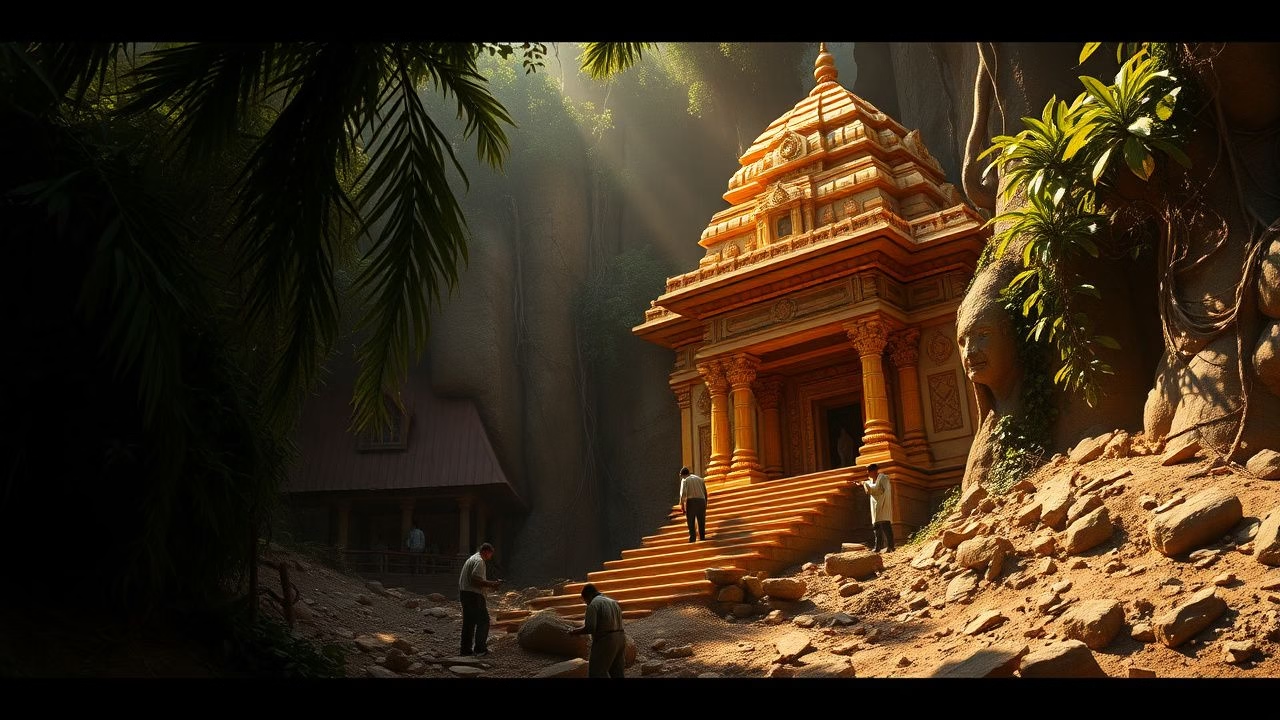
Recent excavations in regions like Karnataka and Tamil Nadu have revealed temple complexes and artifacts that hint at immense prosperity. Gold coins, intricate jewelry, and inscriptions referencing lavish donations to temples suggest that certain cities may have inspired the golden city legends. While these finds don’t confirm the existence of a literal city made of gold, they do paint a picture of a civilization where wealth and artistry flourished.
The Role of Folklore and Mythology
Indian folklore is rich with tales of hidden treasures and cursed cities. The story of Raja Bhoj’s gold, for instance, tells of a king who buried his wealth to protect it from invaders. Similarly, the legend of the Yaksha Prashna involves a guardian spirit who tests travelers seeking hidden riches. These stories, passed down through generations, reflect a cultural fascination with lost wealth and the unknown.
Mythology also plays a significant role. The concept of Swarna Lanka (Golden Lanka) in the Ramayana, ruled by the demon king Ravana, adds another layer to the golden city narrative. While these tales are symbolic, they often draw from real historical events or places, blurring the line between myth and reality.
Modern Expeditions and Research
In recent decades, archaeologists and historians have employed advanced technology to explore potential sites linked to the golden city legend. Ground-penetrating radar, satellite imagery, and underwater surveys have been used to investigate areas like the Gulf of Khambhat, where submerged structures have been detected. While these efforts haven’t yielded a golden city, they’ve uncovered evidence of ancient settlements that align with historical records.
Collaborations between Indian and international research teams have also shed light on India’s maritime trade routes, which connected it to other wealthy civilizations. Artifacts from these excavations, such as Roman coins and Chinese pottery, underscore the economic might of ancient Indian kingdoms. Though the golden city remains undiscovered, each finding brings researchers closer to understanding India’s storied past.
Cultural Significance and Local Beliefs
For many communities in India, the lost city of gold isn’t just a historical curiosity—it’s a living tradition. In some regions, festivals and rituals commemorate the legends, keeping the stories alive. Villagers in parts of Rajasthan and Madhya Pradesh, for example, speak of hidden tunnels and underground chambers where treasure might lie.
These beliefs often influence local customs and even tourism. Guides in historic areas sometimes weave golden city tales into their narratives, drawing visitors eager to experience a piece of the mystery. While skeptics dismiss these accounts as fanciful, they remain an integral part of India’s cultural fabric.
Debunking Myths and Misconceptions
The idea of a city entirely made of gold is, of course, improbable. Gold is a soft metal, unsuitable for constructing buildings or roads. More plausible is the theory that the legend refers to a city adorned with gold—perhaps its temples, palaces, or statues. This interpretation aligns with known practices of ancient Indian rulers, who often commissioned gold-plated structures to showcase their power.
Another misconception is that the golden city was a single, unified place. In reality, multiple wealthy cities may have contributed to the legend over time. As trade routes shifted and empires rose and fell, stories of their splendor could have merged into one overarching myth.
Conclusion
The lost city of gold in India remains one of history’s enduring enigmas. Whether rooted in fact or fiction, the legend speaks to humanity’s timeless fascination with hidden treasures and forgotten civilizations. While archaeologists may never uncover a literal golden city, their work continues to reveal the incredible richness of India’s past.
For now, the mystery lives on—in ancient texts, local traditions, and the imaginations of those who dream of discovering the ultimate prize. Perhaps the real treasure isn’t gold at all, but the stories and history that connect us to a world long gone.
FAQs
1. Has the lost city of gold in India been found?
No definitive discovery has been made, though archaeologists have uncovered clues that suggest prosperous ancient settlements.
2. What are the most likely locations for the golden city?
Regions like Karnataka, Tamil Nadu, and Gujarat have yielded artifacts that hint at wealthy cities, but no single location has been confirmed.
3. Is the golden city mentioned in any ancient texts?
Yes, texts like the Mahabharata and Puranas reference wealthy cities, though they don’t explicitly describe a fully golden metropolis.
4. Are there any ongoing expeditions to find the city?
Researchers continue to explore potential sites using modern technology, but no large-scale expeditions are currently focused solely on the golden city.
5. Why does the legend persist despite lack of evidence?
The combination of folklore, historical accounts, and cultural traditions keeps the legend alive, even as archaeologists work to separate fact from fiction.