Introduction
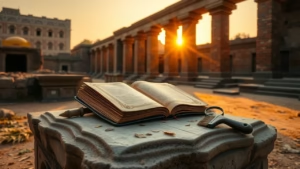
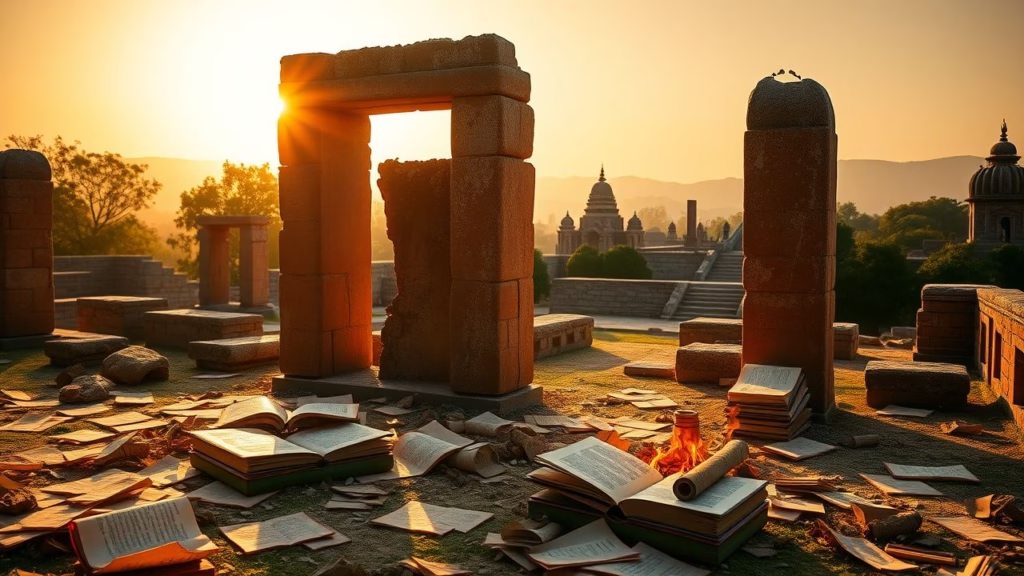
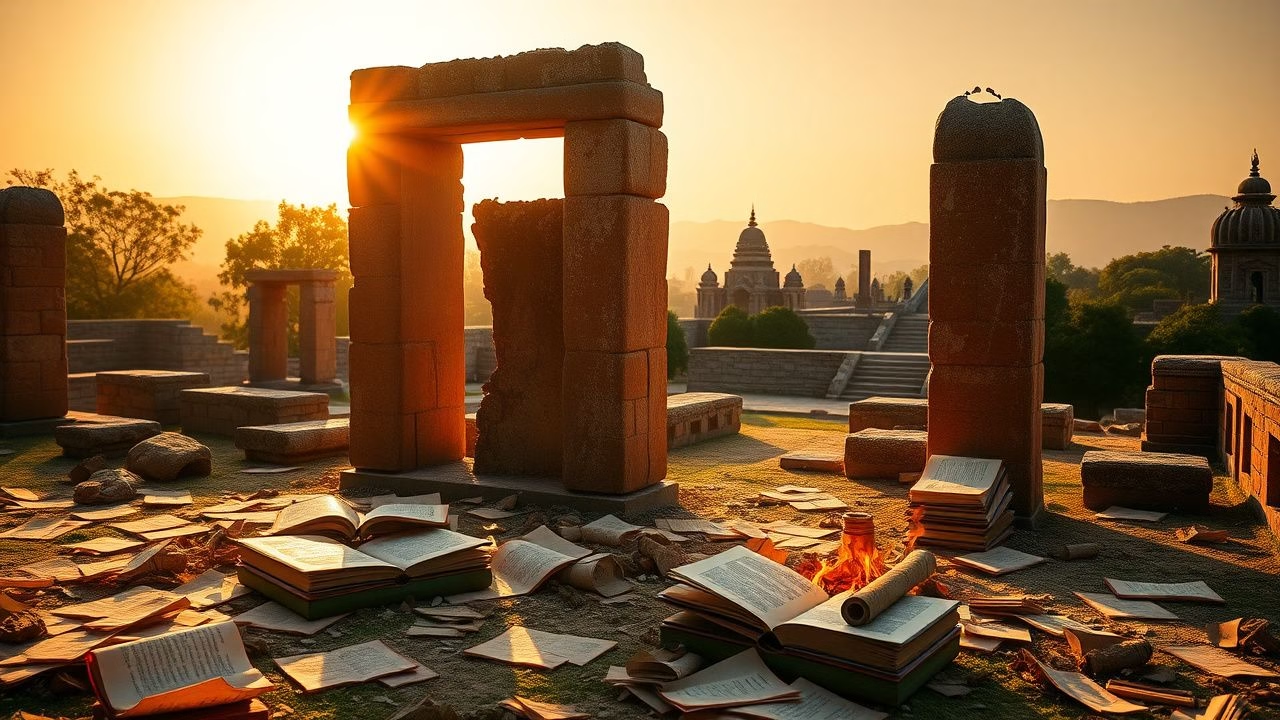
Nestled in the ancient lands of Bihar, India, the ruins of Nalanda University stand as a silent testament to one of the world’s greatest centers of learning. Among its many treasures, the legendary Golden Library of Nalanda was said to house an unparalleled collection of Buddhist scriptures, philosophical treatises, and scientific texts. Yet, this magnificent repository of knowledge vanished under mysterious circumstances, leaving behind only fragments of its legacy. What really happened to India’s greatest intellectual treasure? Let’s delve into the history, theories, and enduring mysteries surrounding the lost Golden Library of Nalanda.
The Glory of Nalanda University
Founded in the 5th century CE, Nalanda University was a beacon of knowledge, attracting scholars from across Asia. It flourished under the patronage of Gupta and Pala rulers, becoming a hub for Buddhist studies, astronomy, medicine, and logic. The university boasted thousands of students and hundreds of teachers, with its vast library—often referred to as the “Golden Library”—housing millions of manuscripts.
The Structure of the Library
Historical accounts describe the library as a grand three-story building called Dharmaganja, divided into three sections: Ratnasagara (Ocean of Jewels), Ratnodadhi (Sea of Jewels), and Ratnaranjaka (Delighter of Jewels). These names reflect the priceless nature of the texts stored within, many of which were written on palm leaves and meticulously preserved.
The Destruction of Nalanda
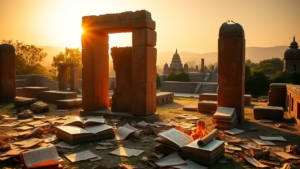
The downfall of Nalanda is often attributed to the invasion of Bakhtiyar Khilji, a Turko-Afghan military general, in the late 12th century. According to Persian chronicles, Khilji’s forces set fire to the university, burning its libraries for months. The destruction was so thorough that it erased centuries of accumulated wisdom.
Was the Golden Library Really Destroyed?
While Khilji’s invasion is widely accepted as the primary cause of Nalanda’s destruction, some historians argue that the Golden Library may have been partially saved. Tibetan monk and scholar Dharmasvamin reported seeing surviving manuscripts during his visit in the 13th century, suggesting that not all knowledge was lost. Others speculate that monks may have hidden precious texts in secret chambers or transported them to Tibet and other regions.
Theories About the Lost Treasures
Several theories persist about the fate of Nalanda’s manuscripts:
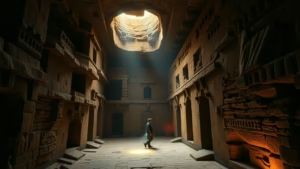
- Buried Beneath the Ruins: Excavations at Nalanda have uncovered fragments of manuscripts, fueling hopes that more texts remain hidden underground.
- Transferred to Tibet: Many Buddhist texts from Nalanda were translated into Tibetan and preserved in monasteries, possibly including works from the Golden Library.
- Scattered Across Asia: Traders and scholars may have carried manuscripts to Sri Lanka, China, and Southeast Asia, where they were copied and preserved.
Modern Efforts to Rediscover Nalanda’s Legacy
Today, archaeologists and historians continue to search for clues about the Golden Library. The Nalanda Archaeological Site remains an active excavation zone, with researchers using advanced technology to uncover hidden chambers. Meanwhile, digital initiatives aim to reconstruct Nalanda’s lost knowledge by compiling surviving texts from around the world.
Revival of Nalanda University
In 2014, the Government of India, along with international partners, re-established Nalanda University near the ancient site. While it cannot replace the original, the new institution seeks to revive Nalanda’s spirit of global scholarship and intellectual exchange.
Frequently Asked Questions
What was the Golden Library of Nalanda?
The Golden Library was a legendary repository of Buddhist and secular texts at Nalanda University, renowned for its vast collection of manuscripts on philosophy, science, and medicine.
Who destroyed Nalanda University?
Bakhtiyar Khilji, a Turko-Afghan invader, is historically blamed for burning Nalanda University in the late 12th century, leading to the destruction of its libraries.
Are there any surviving manuscripts from Nalanda?
Yes, some manuscripts survived through translations in Tibet, China, and Southeast Asia. Fragments have also been found in archaeological excavations.
Could the Golden Library still be hidden underground?
Some scholars believe undiscovered chambers may contain preserved texts, but no conclusive evidence has been found yet.
How is Nalanda’s legacy being preserved today?
Efforts include archaeological digs, digital archiving of surviving texts, and the revival of Nalanda University as a modern center of learning.
Conclusion
The Golden Library of Nalanda remains one of history’s most tantalizing mysteries—a symbol of India’s rich intellectual heritage and the fragility of knowledge. While its physical form may be lost, the legacy of Nalanda endures in surviving texts, ongoing research, and the enduring quest to reclaim its wisdom. Perhaps one day, new discoveries will shed light on the full extent of this vanished treasure.