Introduction
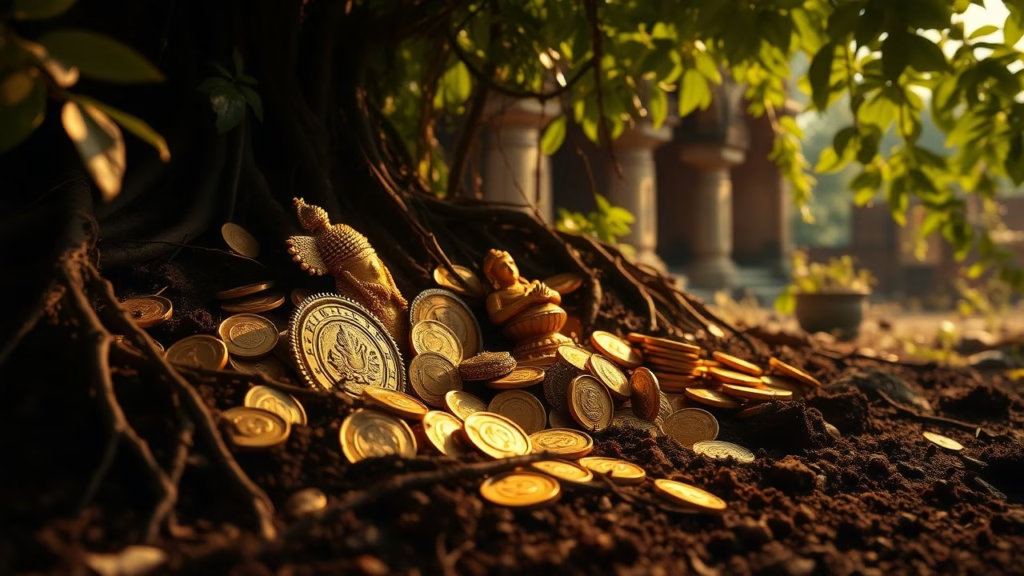
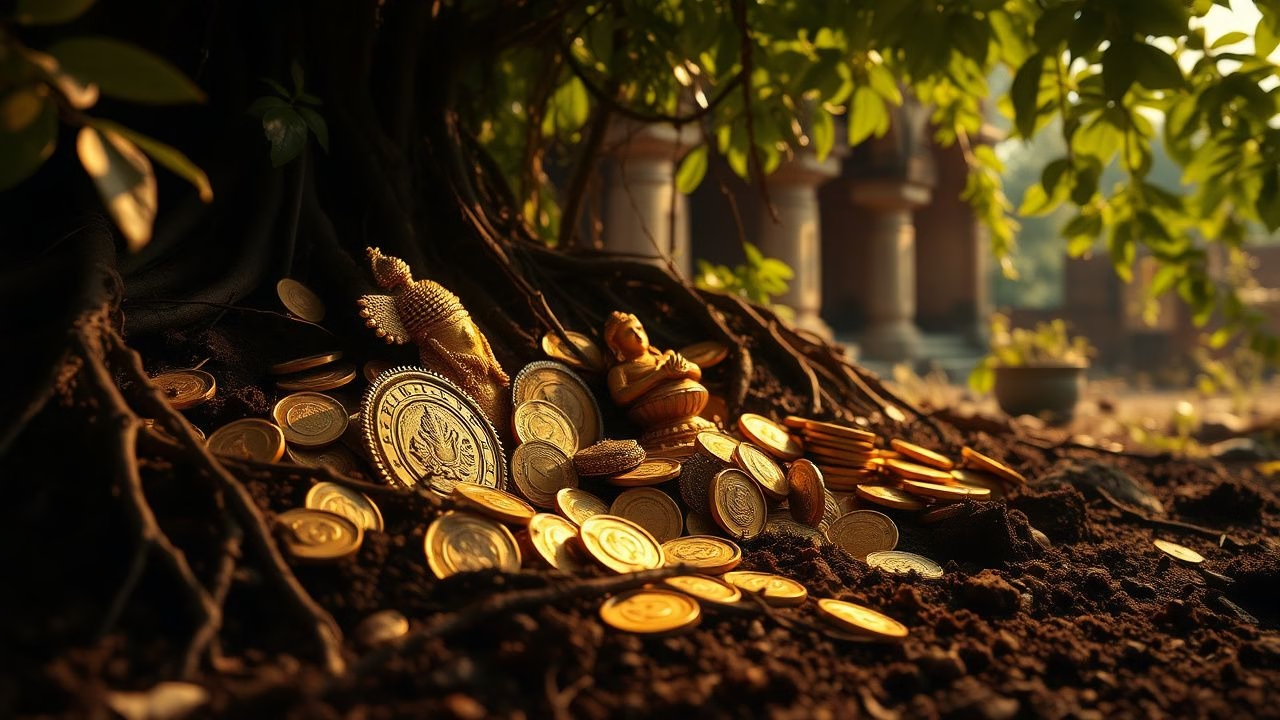
The legend of Raja Bhoj’s vanished gold is one of India’s greatest unsolved mysteries. Raja Bhoj, a legendary king of the Paramara dynasty, is said to have ruled over a vast and prosperous kingdom. Historical texts describe unimaginable wealth, including a fabled treasure trove of gold that mysteriously disappeared without a trace. Despite modern technology and countless expeditions, scientists and archaeologists remain baffled by its whereabouts. This article delves into the intriguing mystery, exploring historical accounts, theories, and why this enigmatic disappearance continues to captivate treasure hunters and historians alike.
The Legend of Raja Bhoj and His Immense Wealth
Raja Bhoj, who ruled between the 10th and 11th centuries, is remembered as one of India’s most powerful and scholarly kings. His reign saw advancements in architecture, literature, and military prowess. Ancient texts, including inscriptions and manuscripts, describe his immense treasures—gold coins, jewelry, and artifacts—so vast that they were stored in secret vaults. The sheer scale of his wealth has been compared to that of legendary emperors like Chandragupta Maurya and Krishnadevaraya of Vijayanagara.
Descriptions of the Treasure
Chronicles from medieval travelers and historians such as Al-Biruni mention Raja Bhoj’s gold-filled chambers. Some accounts claim that his treasury was so large that it could finance entire kingdoms for decades. Others describe intricately crafted gold statues and ceremonial items gifted to temples and scholars. The treasure was not just a symbol of wealth but also of royal authority and divine favor.
The Sudden Disappearance
What makes this story particularly fascinating is how the treasure vanished. After Raja Bhoj’s death, his kingdom faced invasions from neighboring dynasties. Yet, none of the conquerors found the gold—his legendary hoard seemed to disappear overnight. Some believe it was hidden to protect it from invaders, while others speculate it was cursed or taken by supernatural forces.
Archaeological and Scientific Investigations
Scientists, historians, and treasure hunters have attempted to locate Raja Bhoj’s treasure using both traditional archaeology and modern technology. Yet, no definitive evidence has surfaced, deepening the mystery.
Excavations in Dhar and Surrounding Areas
Dhar, the capital of Raja Bhoj’s kingdom, has been a focal point for excavations. Archaeologists have uncovered remnants of his grand palaces, temples, and educational institutions. However, the most sought-after artifacts—the gold—have remained elusive. Some researchers theorize that the treasure may have been moved to underground tunnels or submerged in nearby lakes.
Modern Technology in the Search
Ground-penetrating radar (GPR), satellite imaging, and LiDAR have been employed to scan potential hiding spots. While these methods have detected anomalies beneath the earth, none have yielded conclusive proof of the treasure’s existence. The dense foliage and geological shifts over centuries have further complicated the search.
Theories Behind the Disappearance
Several theories attempt to explain the vanishing of Raja Bhoj’s treasure:
- Hidden by Trusted Advisors: Some historians suggest that Raja Bhoj’s ministers or trusted priests concealed the treasure to prevent it from falling into enemy hands.
- Buried in Underground Tunnels: Folklore speaks of a network of secret tunnels beneath Dhar where the gold might be stashed.
- Divine or Mythical Claims: Local legends claim that mystical beings or deities took the treasure back, deeming it too sacred for mortals.
- Lost in Battles or Dispersal: Some argue that invaders looted and dispersed the wealth, erasing its trace over time.
The Cultural Impact of the Legend
The mystery of Raja Bhoj’s gold has permeated Indian culture, inspiring folklore, literature, and even modern-day treasure hunts. The story reflects themes of lost glory, divine justice, and the fleeting nature of wealth.
Influence on Popular Media
The legend has been featured in books, documentaries, and TV shows exploring historical mysteries. It continues to fuel imagination, much like the lost treasures of the Nizams or the unfound riches of the Chola dynasty.
Treasure Hunting and Tourism
Adventurers and researchers still flock to Dhar and surrounding regions, hoping to uncover even a fragment of the treasure. The legend also boosts local tourism, with heritage walks and guided expeditions retracing Raja Bhoj’s footsteps.
Frequently Asked Questions
Who was Raja Bhoj?
Raja Bhoj was a celebrated king of the Paramara dynasty, ruling much of central India. Known for his wisdom, patronage of the arts, and military strength, his reign is considered a golden age in Indian history.
How big was Raja Bhoj’s treasure?
Historical accounts describe his wealth as enormous, with gold overflowing in royal vaults. The exact quantity remains unknown, but estimates suggest it could have financed entire kingdoms for years.
Has any part of the treasure been found?
To date, no substantial portion of Raja Bhoj’s treasure has been recovered. Occasional finds, such as coins or artifacts, have sparked interest, but the bulk of the hoard remains missing.
Why hasn’t modern technology located the treasure?
While advanced tools help, geological changes, urban development, and incomplete historical records have impeded discovery. Some experts believe the treasure may no longer exist in its original form.
Could the treasure be cursed?
Some legends suggest supernatural involvement, claiming that those who seek the treasure meet misfortune. However, this remains part of folklore without scientific proof.
Conclusion
The mystery of Raja Bhoj’s vanished gold remains one of history’s greatest enigmas. Despite centuries of searching, the treasure eludes discovery, fueling curiosity and speculation. Whether hidden, lost, or mythical, the legend endures as a testament to India’s rich and mysterious past. Until new evidence emerges, Raja Bhoj’s gold will continue to captivate treasure seekers and historians, symbolizing the eternal allure of the unknown.