Introduction
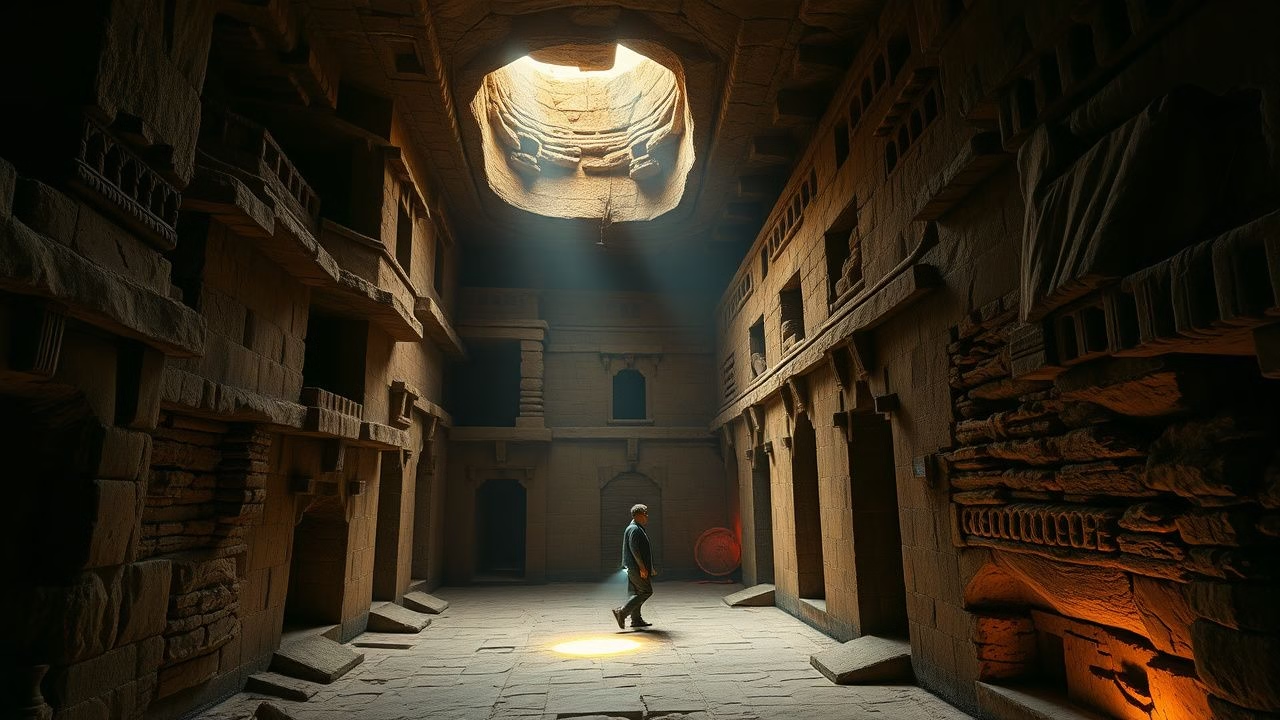
Beneath the bustling streets and modern cities of India lies a mysterious secret—an ancient underground metropolis that continues to baffle archaeologists and historians. This hidden city, carved deep into the earth, raises countless questions about its origins, purpose, and sudden abandonment. Despite extensive research, scientists still struggle to explain who built it or why it was left behind. Join us as we explore this enigmatic marvel, uncovering its secrets and the theories that surround it.
The Discovery of the Underground City
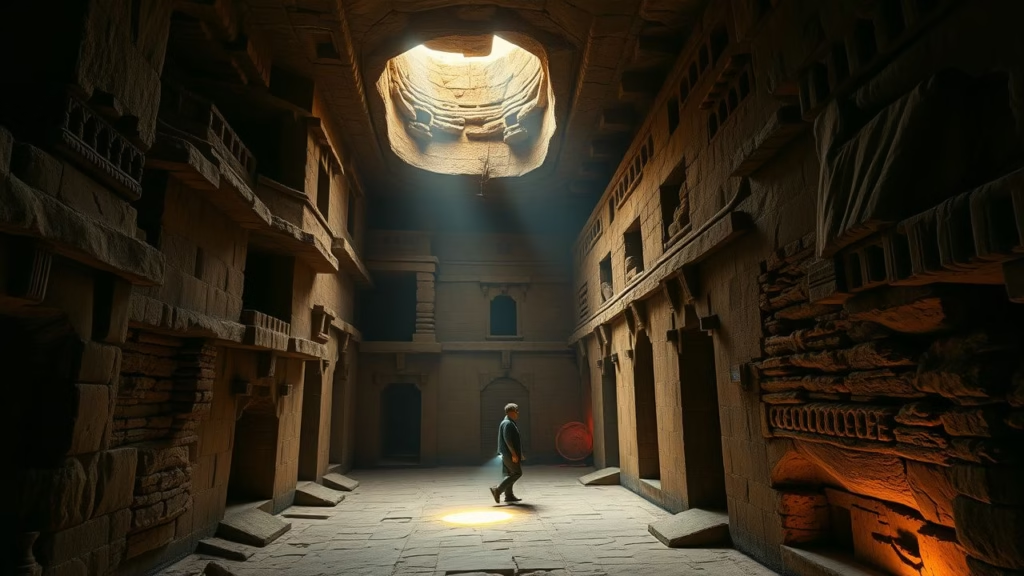
The underground city was accidentally discovered during a routine excavation in western India. Workers stumbled upon a series of tunnels leading to an expansive network of chambers, staircases, and ventilation shafts. The sheer scale of the site suggests it was once a thriving settlement, capable of housing thousands of people. Yet, no historical records mention its existence, leaving researchers to piece together clues from the ruins.
Key Features of the Underground City
- Multi-level structures with interconnected passages
- Advanced ventilation systems to maintain air quality
- Water storage tanks and drainage systems
- Carved stone pillars and intricate architectural details
Who Built the Underground City?
The identity of the builders remains one of the biggest mysteries. Some theories suggest it was constructed by an ancient civilization predating the Indus Valley, while others propose it was a secret refuge for royalty or religious sects. The precision of the carvings and engineering hints at a highly skilled society, yet no artifacts or inscriptions have been found to confirm their identity.
Possible Civilizations Behind Its Construction
- The Indus Valley Civilization—known for advanced urban planning
- A lost pre-Vedic culture with undocumented technological prowess
- A hidden sect seeking isolation for spiritual practices
Why Was the Underground City Abandoned?
Another perplexing question is why such a sophisticated settlement was abandoned. Some researchers believe natural disasters, such as earthquakes or floods, forced inhabitants to flee. Others speculate that invasions or internal conflicts led to its desertion. The absence of human remains or signs of battle adds to the mystery, leaving room for countless interpretations.
Theories About Its Abandonment
- Environmental changes made the underground habitat unsustainable
- Religious or cultural shifts prompted migration
- A sudden, unexplained event caused mass evacuation
The Significance of the Underground City in Indian History
If proven to be linked to an unknown civilization, this underground city could rewrite India’s historical narrative. Its advanced engineering challenges conventional timelines of human development in the region. Additionally, its discovery highlights the possibility of other hidden settlements waiting to be uncovered beneath India’s vast landscape.
How It Compares to Other Ancient Sites
Unlike the well-documented ruins of Mohenjo-Daro or Hampi, this underground city lacks clear cultural or historical ties. Its uniqueness makes it a focal point for researchers studying ancient urban planning and human adaptability.
Visiting the Underground City Today
While parts of the underground city remain inaccessible for safety reasons, limited sections are open to the public. Visitors can explore the eerie passageways and marvel at the ancient craftsmanship. Preservation efforts are ongoing to protect the site from environmental damage and vandalism.
Tips for Explorers
- Wear comfortable shoes—the terrain is uneven
- Bring a flashlight for better visibility in dimly lit areas
- Respect preservation guidelines—do not touch carvings or structures
Frequently Asked Questions
Where exactly is the underground city located?
The exact location is kept confidential to prevent unauthorized excavations, but it is situated in the western region of India, near the border of Rajasthan and Gujarat.
How old is the underground city?
Initial carbon dating suggests it could be over 4,000 years old, but further studies are needed for precise dating.
Why are there no records of this city in ancient texts?
This remains a mystery. Some speculate it was deliberately kept secret, while others believe records may have been lost or destroyed over time.
Are there any plans for further excavations?
Yes, archaeological teams are working on phased excavations to uncover more sections while ensuring the site’s preservation.
Can tourists visit the underground city?
Limited areas are open to the public under guided tours, but access is restricted to protect the site’s integrity.
Conclusion
The hidden underground city of India stands as a testament to the ingenuity of ancient civilizations and the enduring mysteries of human history. While scientists continue to unravel its secrets, the site captivates explorers and historians alike. Whether it was a refuge, a spiritual sanctuary, or a lost metropolis, its discovery reminds us that India’s past is far more complex—and fascinating—than we ever imagined.