Introduction
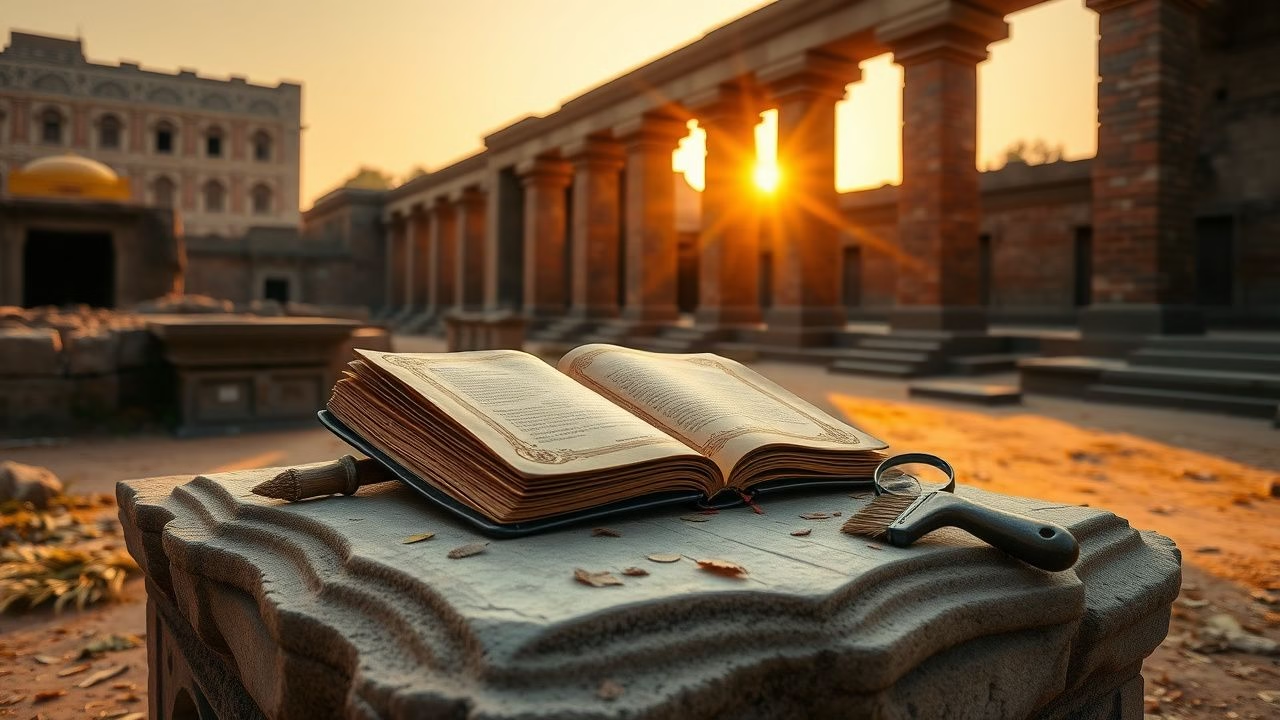
India has long been a cradle of knowledge, and few places embody this legacy as profoundly as the ancient Nalanda University. Among its many treasures, the legendary Golden Library of Nalanda stands out—a vast repository of wisdom that vanished under mysterious circumstances. Historians and archaeologists continue to search for answers, but much of its story remains buried beneath layers of time. This article delves into the secrets of this lost marvel, exploring its significance, the theories behind its disappearance, and why it still captivates scholars today.
The Glory of Nalanda University
Nalanda University, established in the 5th century CE in present-day Bihar, was one of the world’s first residential universities. It attracted scholars from across Asia, offering advanced studies in subjects like philosophy, astronomy, medicine, and mathematics. At its peak, the university housed thousands of students and teachers, making it a beacon of intellectual exchange.
The Golden Library: A Treasure Beyond Compare
The Golden Library, also known as Dharma Gunj or “Mountain of Truth,” was said to contain millions of manuscripts written on palm leaves and birch bark. These texts covered diverse fields, including Buddhist scriptures, scientific treatises, and literary works. Some accounts describe its shelves lined with gold-plated copper plates, earning it the name “Golden Library.”
The Mysterious Disappearance
The destruction of Nalanda and its library remains shrouded in mystery. The most widely accepted account attributes its downfall to the invasion of Bakhtiyar Khilji, a Turkic military general, in the 12th century. Legend says the library burned for months, its knowledge lost forever. However, some historians argue that parts of the library may have been hidden or relocated before the attack.
Clues from Ancient Texts and Travelers
Chinese pilgrim Xuanzang, who studied at Nalanda in the 7th century, left detailed accounts of its grandeur. Tibetan texts also mention efforts to preserve Nalanda’s manuscripts by smuggling them to safety. These records fuel speculation that fragments of the library may still exist, waiting to be rediscovered.
Modern Archaeological Efforts
Excavations at Nalanda have uncovered remnants of its sprawling campus, including monasteries, temples, and lecture halls. Yet, the Golden Library’s exact location remains elusive. Some researchers believe it may lie beneath unexplored sections of the site, while others theorize that its contents were dispersed across monasteries in Tibet and Nepal.
The Role of Technology in the Search
Advanced technologies like ground-penetrating radar and LiDAR are now being used to scan the ruins for hidden chambers. These tools offer hope that future discoveries could finally unveil the library’s secrets. Meanwhile, digitization projects aim to reconstruct Nalanda’s lost knowledge from surviving fragments.
Why the Golden Library Matters Today
The loss of the Golden Library represents more than just the destruction of books—it symbolizes the fragility of human knowledge. In an era where information is increasingly digitized, Nalanda’s story serves as a reminder of the importance of preserving cultural heritage. Efforts to revive Nalanda University in modern times reflect India’s commitment to reclaiming its intellectual legacy.
Lessons for the Digital Age
The tragedy of Nalanda underscores the need for robust systems to protect knowledge. From decentralized digital archives to global collaborations, modern solutions can help prevent such losses in the future. The Golden Library’s legacy inspires ongoing efforts to safeguard humanity’s collective wisdom.
Frequently Asked Questions
What was the Golden Library of Nalanda?
The Golden Library was a legendary repository at Nalanda University, housing millions of manuscripts on diverse subjects. Its name comes from accounts describing gold-plated shelves and priceless texts.
Who destroyed the Golden Library?
Most historians attribute its destruction to Bakhtiyar Khilji’s invasion in the 12th century, though some believe parts of the library may have survived.
Are there any surviving manuscripts from Nalanda?
Yes, some texts were preserved in Tibet, Nepal, and China. Scholars are piecing together these fragments to reconstruct Nalanda’s lost knowledge.
Could the Golden Library still be hidden underground?
Some archaeologists believe undiscovered chambers may exist beneath the ruins. Ongoing excavations and advanced scanning technologies could reveal new clues.
How is Nalanda University connected to modern India?
A new Nalanda University was established near the ancient site in 2010, symbolizing India’s dedication to reviving its scholarly traditions.
Conclusion
The Golden Library of Nalanda remains one of history’s greatest enigmas—a testament to India’s rich intellectual heritage and the enduring quest for knowledge. While its physical form may be lost, its spirit lives on in the ongoing efforts to uncover and preserve ancient wisdom. As technology and archaeology advance, there is hope that future generations may yet unlock the secrets of this vanished treasure.