
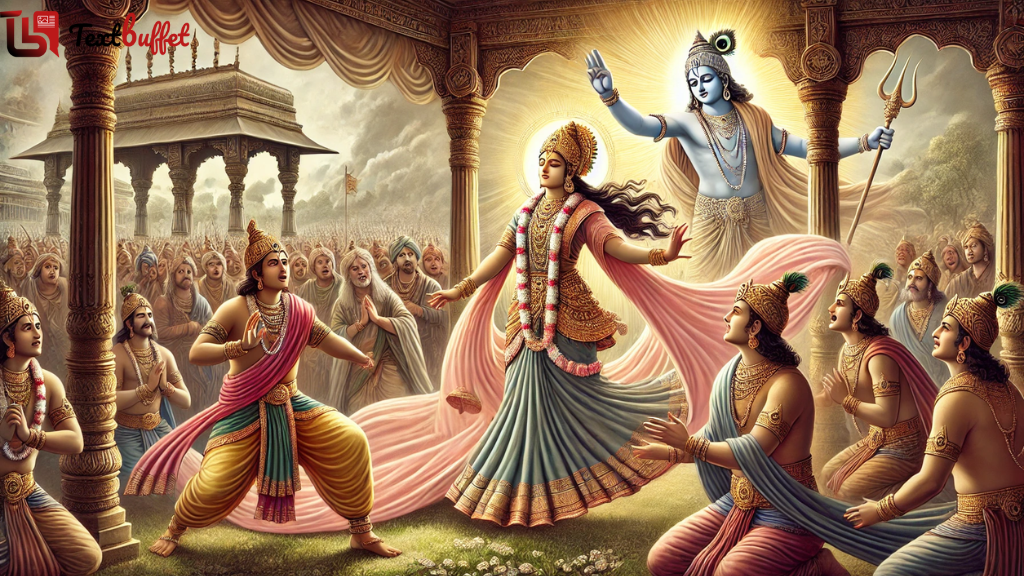
 On the auspicious occasion of Krishna Janmashtami, as we celebrate the birth of Lord Krishna, it’s a perfect time to reflect on his divine interventions that have left a lasting impact on humanity. When Krishna comes to Draupadi’s rescue during her Cheer-Haran (disrobing) in the Kaurava court, it is one of the most tragic and powerful scenes in the Mahabharata. This event emphasizes Krishna’s protective duty and reflects the timeless lessons of the Bhagavad Gita, which he later taught Arjuna on the Kurukshetra.
The Dark Day
There are many extremely important moral and ethical events in the Mahabharata, but few are as tragic as Draupadi’s Cheer-Haran. The event happened in the Hastinapur court after Yudhishthira, the Pandavas’ eldest son, lost everything in a dice game—his kingdom, his brothers, and ultimately, his wife Draupadi. Inspired by his anger against the Pandavas, Duryodhana, the eldest Kaurava, commanded that Draupadi be taken before the court and punished with humiliation.
After Draupadi’s dragging into the court, she faced sarcastic laughter and staring glances. She begged Bhishma, Drona and the other elders wondering if a woman could be bet and lost in a dice game. She asked, but there was no response. That day was made even darker by the illuminated and reasonable people’s silence.
Duryodhana gave the order to strip Draupadi in front of everyone present. Duryodhana’s close person Karna approved of this terrible act, and another Kaurava brother, Dushasana, took it upon himself to carry out the command.
Presence of Krishna
Seeing that no one in the court would help her at that point, Draupadi lifted her eyes to the skies and humbly pleaded to Lord Krishna. Her only hope in that horrible situation was him, and her heart screamed out to him. And Krishna answered her cry, for he is ever present where true devotion exists.
Just as Dushasana started pulling her sari, an amazing event occurred. He tried, but the sari would not stop expanding. Draupadi’s dignity was hidden by the amount of material that came as Dushasana pulled harder. Dushasana finally gave up, exhausted and embarrassed, but Draupadi kept her clothes on and her dignity unharmed.
Krishna’s intervention from above acts as a powerful reminder of the promise he made in the Bhagavad Gita to safeguard those who submit to him out of everlasting devotion. Krishna’s protection and Draupadi’s constant faith represent the lasting connection between a devotee and God.
Glimpses of the Bhagavad Gita
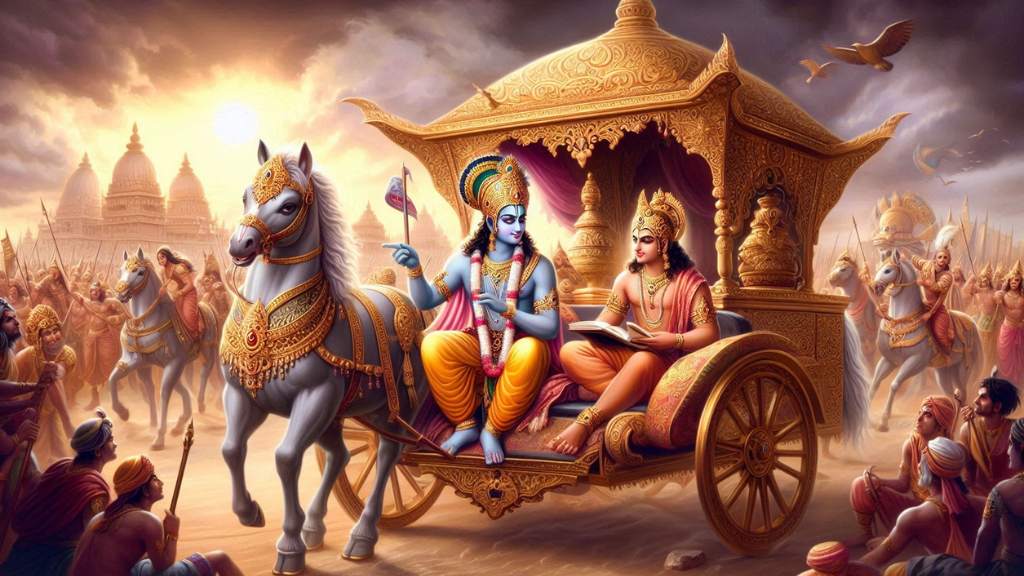
Responsibility and Ethics Krishna highlights in the Bhagavad Gita the significance of carrying out one’s duties without concern for the outcome. Draupadi’s act of pure devotion, without any desire for reward, was her faith in Krishna during her darkest hour. By surrendering to the divine, she performed her duty as a devotee, and Krishna, in turn, completed his duty as her guardian.
Giving Up to the Divine, Krishna teaches in the Gita that one should give up all control over one’s activities and turn to the divine for comfort. This lesson is illustrated by Draupadi’s total surrender to Krishna in the Kaurava court. She gave up all material attachments during her worst hour and put all of her faith in Krishna, who answered by making sure of her safety.
Krishna teaches us the values of upholding our dharma, surrendering to the divine, and keeping in mind the passing away of the material world. We can all be inspired by Draupadi’s constant confidence in Krishna despite immense difficulties. It serves as a reminder that the divine will always act on our behalf if we stay firm in our dedication and truth, no matter how challenging our circumstances may be.
Let us focus on the Bhagavad Gita’s lessons on this Krishna Janmashtami and make an effort to live our lives as living examples of faith, devotion, and dharma. If we put our trust in Krishna, he will protect and lead us, just as he did for Draupadi.