Introduction
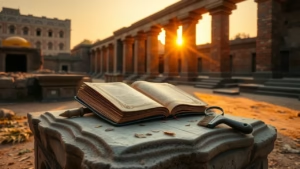
For centuries, the Golden Library of Nalanda stood as a beacon of knowledge, attracting scholars from across Asia. This ancient Indian university housed an unparalleled collection of texts on philosophy, medicine, astronomy, and more. Yet, its destruction in the 12th century remains one of history’s greatest intellectual tragedies. Today, researchers still scour archives and ruins, hoping to recover fragments of the wisdom lost to flames. What secrets did these texts hold, and why does their legacy continue to captivate scholars in 2026?
The Glory of Nalanda’s Golden Library
Nalanda University, established in the 5th century CE in present-day Bihar, India, was a center of learning unlike any other. Its library, known as Dharmaganja or the “Treasury of Truth,” was said to contain hundreds of thousands of manuscripts. These texts spanned disciplines such as:
- Buddhist philosophy and scriptures
- Ayurveda and ancient medical knowledge
- Mathematics and astronomy
- Grammar and linguistics
- Metallurgy and architecture
The library was not just a storehouse of books but a vibrant intellectual hub where scholars debated, translated, and expanded upon the world’s knowledge.
The Scale of the Collection
Historical accounts suggest the library had three multi-story buildings: Ratnasagara (Ocean of Jewels), Ratnodadhi (Sea of Jewels), and Ratnaranjaka (Adorned with Jewels). Some estimates claim it held over 9 million manuscripts, though this number remains debated. What is certain is that Nalanda attracted students from as far as China, Korea, and Persia, making it a truly global institution.
The Destruction: What Was Lost?
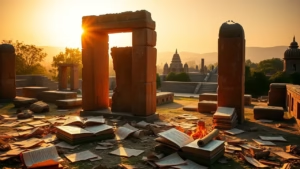
In the late 12th century, Turkic invader Bakhtiyar Khilji razed Nalanda. According to Persian historian Minhaj-i-Siraj, the library burned for months, its smoke darkening the sky. The destruction was not just physical—it erased centuries of accumulated wisdom.
Key Texts That Perished
While no complete inventory survived, scholars have pieced together likely losses:
- Buddhist Sutras: Rare commentaries by Nagarjuna and other masters.
- Medical Treatises: Advanced Ayurvedic knowledge, possibly including early surgical techniques.
- Astronomical Charts: Detailed observations predating European discoveries.
- Philosophical Debates: Lost schools of thought from India’s intellectual golden age.
Why Did the Invaders Burn the Library?
The motives behind the destruction remain complex. Some theories include:
- Ideological Conflict: The invaders saw Buddhist knowledge as heretical.
- Strategic Move: Eliminating a center of learning weakened local resistance.
- Plunder: Manuscripts may have been burned accidentally during looting.
Whatever the reason, the loss was catastrophic for India’s intellectual heritage.
The Modern Search for Fragments
In 2026, scholars continue to hunt for traces of Nalanda’s library. Efforts include:
Archaeological Excavations
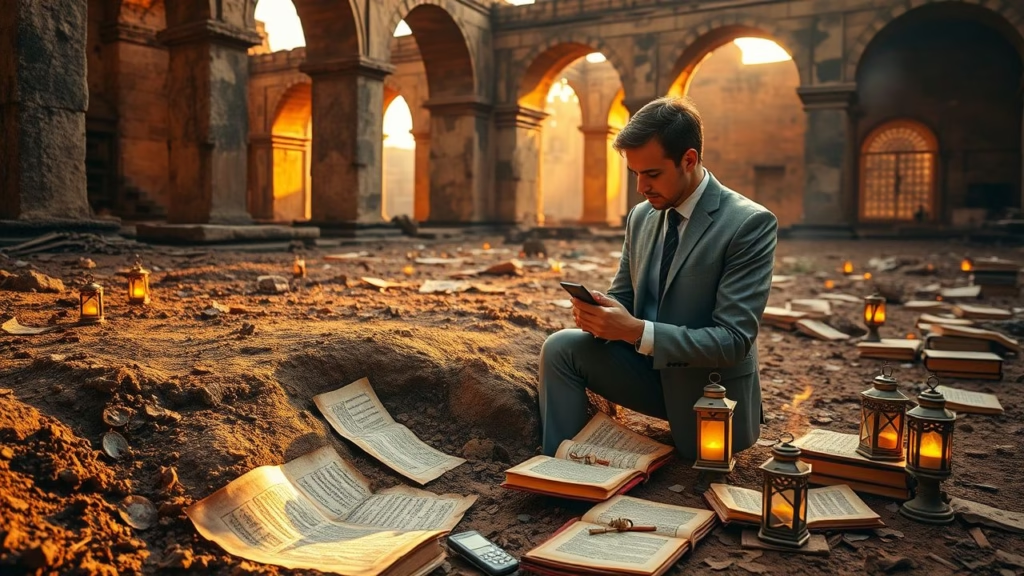
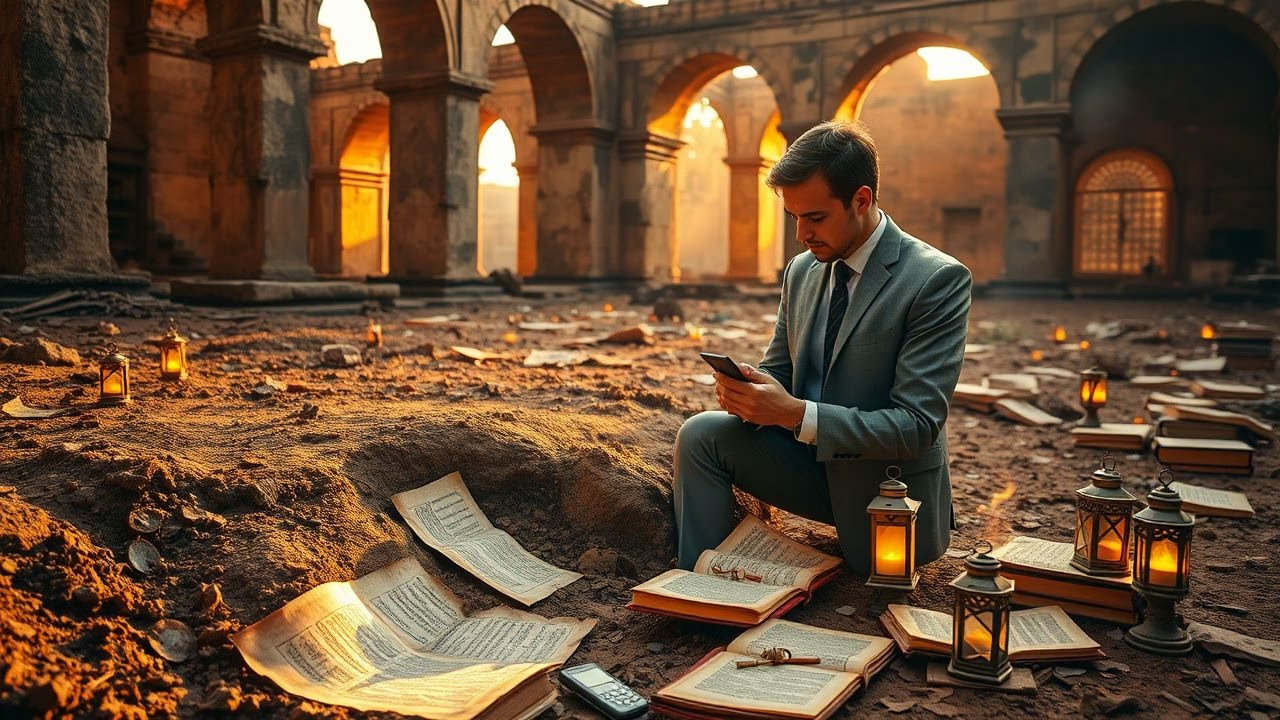
Recent digs at Nalanda’s ruins have uncovered charred palm-leaf manuscripts. Advanced imaging techniques now allow researchers to read previously illegible texts.
Global Collaborations
Since many Nalanda scholars traveled abroad, fragments may exist in:
- Tibetan monasteries
- Chinese imperial archives
- Silk Road trading posts
Digital Reconstructions
Projects like the Nalanda Digital Library use AI to cross-reference surviving quotes from lost texts, attempting to reconstruct their contents.
Why Nalanda’s Legacy Matters Today
Beyond historical curiosity, Nalanda’s texts could offer insights relevant to modern challenges:
- Sustainable Architecture: Ancient Indian cooling techniques.
- Holistic Medicine: Forgotten Ayurvedic remedies.
- Philosophical Wisdom: Alternative approaches to ethics and governance.
Frequently Asked Questions
How many books were in Nalanda’s library?
Estimates range from hundreds of thousands to millions. Exact numbers are unknown due to the complete destruction of records.
Are any original Nalanda manuscripts known to survive?
A handful of texts, such as the Ashtasahasrika Prajnaparamita, exist in Tibetan or Chinese translations. No original Sanskrit or Pali manuscripts from the library itself have been found intact.
Could undiscovered texts still exist underground?
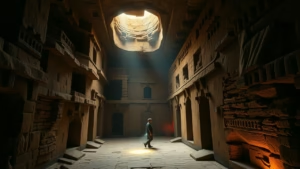
Yes. Archaeologists believe many manuscripts were stored in underground vaults that may have escaped the fires. Recent ground-penetrating radar surveys show promising anomalies.
How can I visit Nalanda today?
The ruins are a UNESCO World Heritage Site in Bihar, India. A new Nalanda University campus nearby continues its educational legacy.
What’s the most sought-after lost text from Nalanda?
Scholars particularly seek the Mahaprajnaparamita Shastra, a monumental Buddhist philosophical work cited by later authors but now lost.
Conclusion
The story of Nalanda’s Golden Library is a poignant reminder of how easily knowledge can be lost—and how persistently it can endure. As search efforts continue in 2026, each recovered fragment offers a glimpse into an intellectual paradise that once flourished in ancient India. For historians, these texts aren’t just relics; they’re missing pieces of humanity’s collective wisdom, waiting to be rediscovered.