Introduction
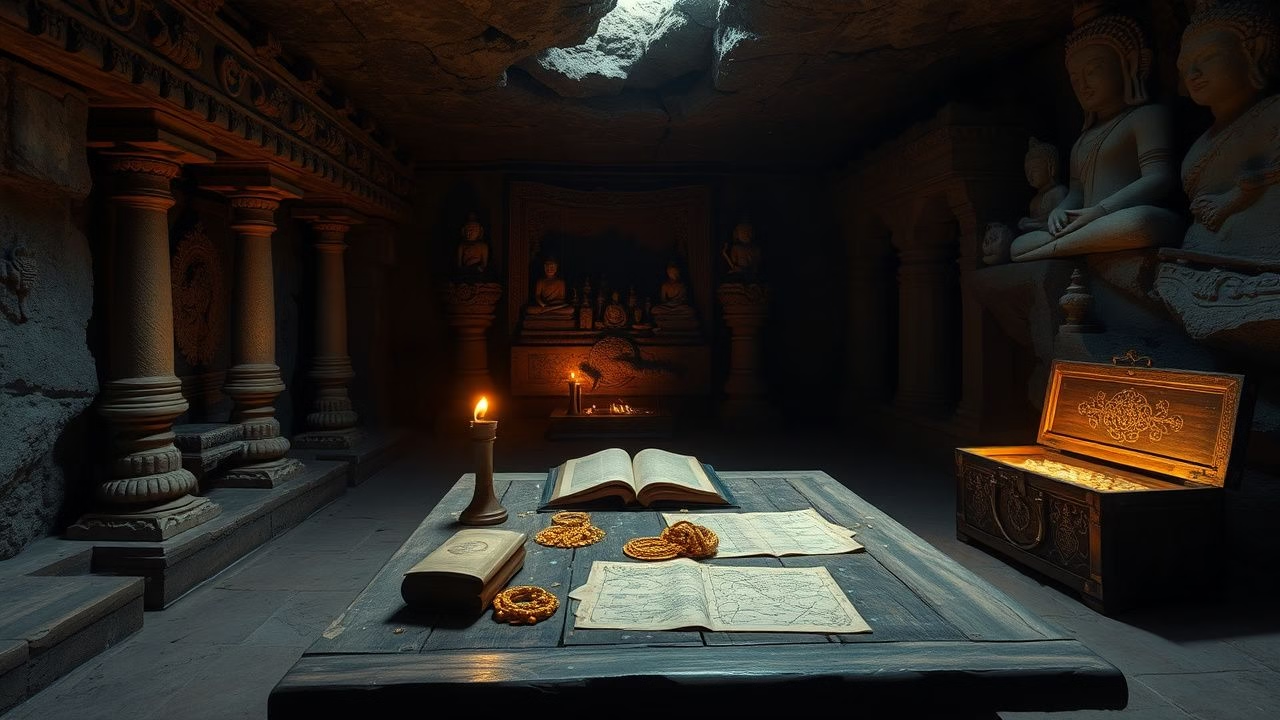
Emperor Ashoka, the great Mauryan ruler of ancient India, is often remembered for his transformation from a ruthless conqueror to a benevolent Buddhist monarch. However, hidden beneath the layers of history lies a lesser-known tale—the secret vaults of Ashoka, rumored to contain unimaginable treasures, sacred relics, and forbidden knowledge. These hidden chambers, scattered across the Indian subcontinent, have intrigued historians, archaeologists, and treasure hunters for centuries. What secrets do these vaults hold? And why has their existence remained shrouded in mystery?
The Legend of Ashoka’s Hidden Vaults
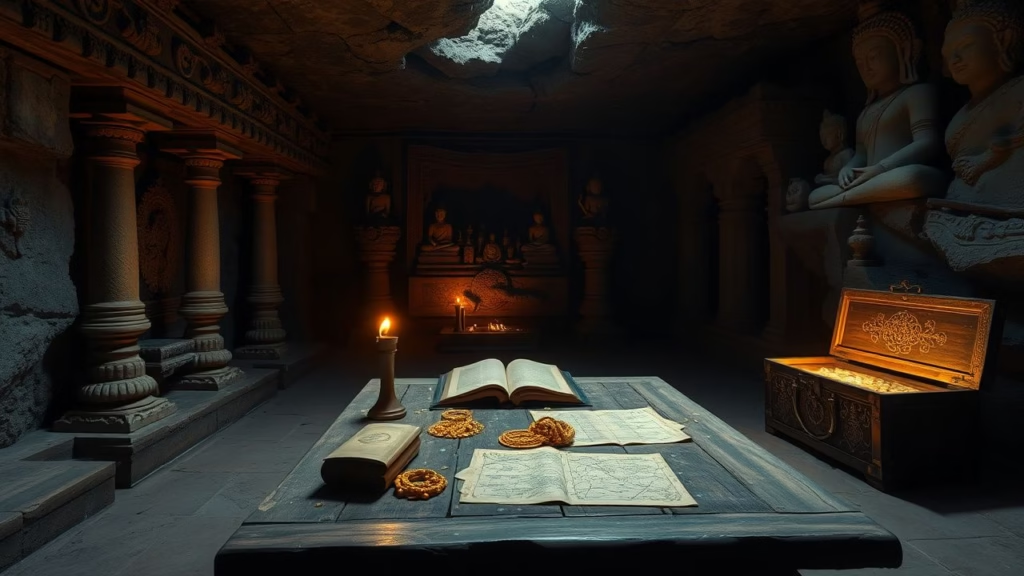
According to ancient texts and oral traditions, Emperor Ashoka commissioned the construction of secret underground chambers to safeguard sacred Buddhist relics, gold, jewels, and esoteric manuscripts. Some believe these vaults also contained advanced knowledge—possibly lost sciences, mystical teachings, or even early forms of technology. Ashoka, who embraced Buddhism after the bloody Kalinga War, sought to preserve wisdom for future generations while keeping it hidden from those who might misuse it.
The Role of the Nine Unknown Men
One of the most fascinating aspects of Ashoka’s hidden vaults is their alleged connection to the “Nine Unknown Men”—a secret society said to have been entrusted with guarding ancient knowledge. Each member was responsible for a different branch of science, from psychology to alchemy. Some theories suggest that these vaults served as repositories for their research, protected from the outside world.
Historical Evidence and Archaeological Clues
While much of the evidence remains speculative, certain discoveries hint at the existence of Ashoka’s hidden vaults. The Ashokan Pillars, inscribed with edicts promoting peace and morality, are often seen as markers pointing to these secret locations. Excavations near ancient Buddhist stupas, such as Sanchi and Sarnath, have revealed underground chambers, though none have been conclusively linked to Ashoka’s legendary treasures.
The Mystery of the Sarnath Vault
One of the most talked-about sites is the Sarnath Vault, discovered during British colonial rule. Reports suggest that a sealed chamber was found beneath the Dhamek Stupa, containing manuscripts and relics. However, the contents were allegedly confiscated and never fully documented, fueling speculation about what truly lay inside.
Theories and Speculations
Several theories surround Ashoka’s hidden vaults, ranging from the plausible to the fantastical. Some scholars argue that these chambers were merely storage spaces for royal wealth, while others believe they held sacred Buddhist texts, including lost sutras. More fringe theories suggest the vaults contained advanced weaponry or even extraterrestrial artifacts.
The Forbidden Knowledge Hypothesis
One compelling theory posits that Ashoka’s vaults held knowledge deemed too dangerous for public dissemination. Ancient Indian texts mention concepts like the “Vimana Shastra” (aeronautics) and “Brahmastra” (a mythical weapon). Could these vaults have been designed to keep such powerful secrets out of the wrong hands?
Modern Searches and Expeditions
In recent years, treasure hunters and researchers have attempted to locate Ashoka’s hidden vaults using advanced technology like ground-penetrating radar. While some promising leads have emerged, no definitive discovery has been made. The Indian government has also been cautious, restricting excavations near protected heritage sites to prevent looting.
The Role of Technology in Unraveling the Mystery
Modern archaeology has made significant strides in uncovering ancient secrets without invasive digging. LiDAR scanning and satellite imagery have revealed hidden structures beneath known Ashokan sites, reigniting interest in the possibility of undiscovered vaults.
Frequently Asked Questions
What are Ashoka’s hidden vaults?
Ashoka’s hidden vaults are rumored underground chambers built during the Mauryan Empire to store treasures, sacred relics, and forbidden knowledge. Their existence is supported by legends but remains unproven archaeologically.
Where are these vaults located?
Possible locations include sites like Sarnath, Sanchi, and other ancient Buddhist stupas. Some believe the Ashokan Pillars serve as markers pointing to these secret chambers.
What might be inside the vaults?
Theories range from gold and jewels to lost Buddhist texts, advanced scientific knowledge, or even mythical weapons. No definitive evidence exists to confirm their contents.
Has anyone found Ashoka’s vaults?
While some underground chambers have been discovered, none have been conclusively linked to Ashoka’s legendary vaults. Many searches remain inconclusive due to limited access and preservation concerns.
Why are the vaults considered forbidden?
Some believe the vaults contain knowledge or artifacts too dangerous for public release, possibly including advanced ancient sciences or weapons. Ashoka may have sought to protect humanity from their misuse.
Conclusion
The hidden vaults of Emperor Ashoka remain one of India’s greatest unsolved mysteries. Whether they hold untold riches, sacred relics, or forbidden knowledge, their legend continues to captivate the imagination. As technology advances and new discoveries emerge, perhaps one day the truth behind these ancient chambers will finally come to light.